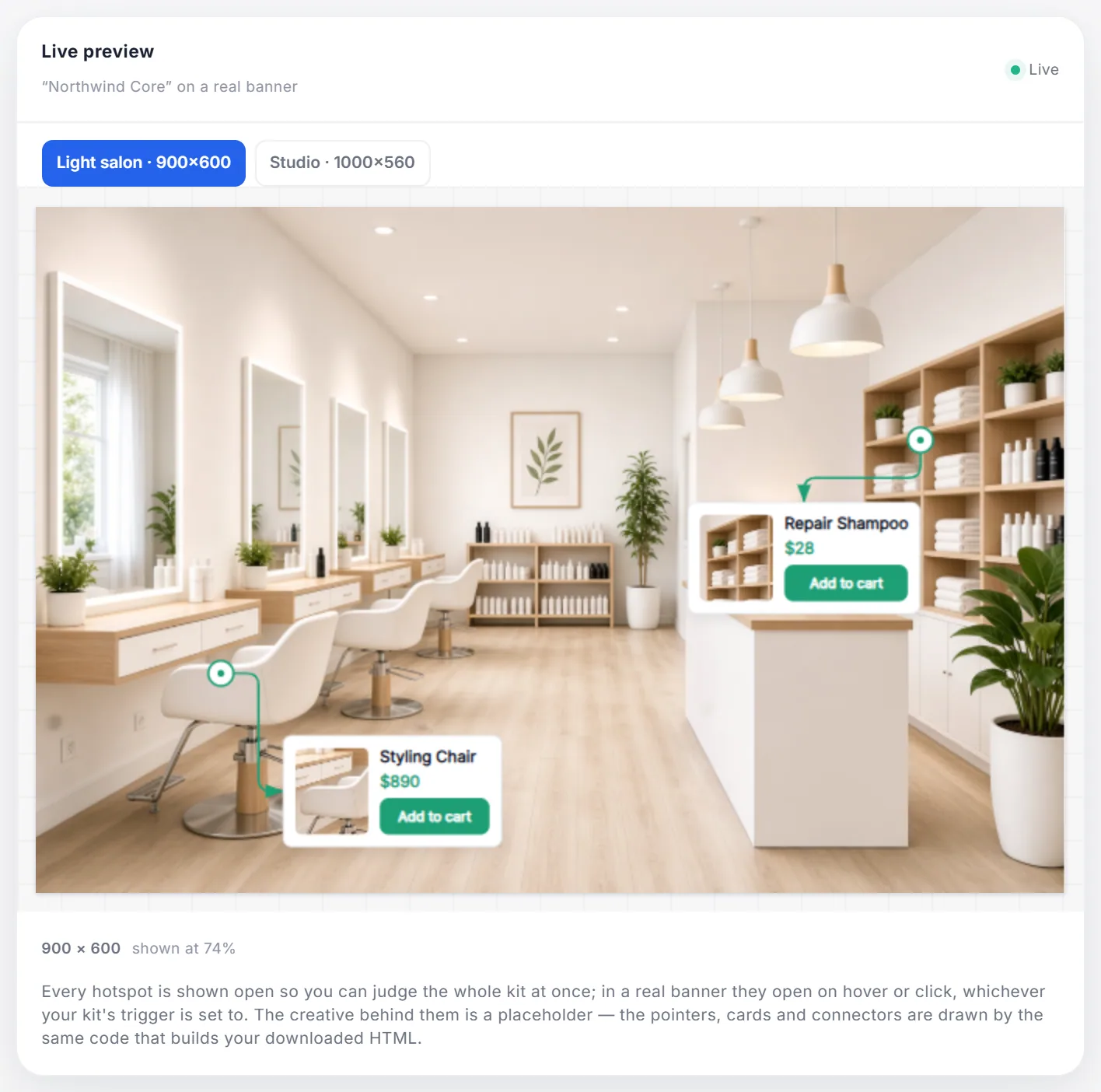
Publishers sit between two groups with different wishes: advertisers who want attention, and readers who came for the content. For years the industry resolved that tension by making ads louder — autoplay, pop-ups, layouts that jump as ads load. Readers answered with ad blockers. There is a better balance.
Engagement that the reader starts
The most respectful kind of engagement is the kind the reader chooses. Formats where nothing happens until someone moves the mouse over a product or taps it — like shoppable banners with hotspots — ask for nothing up front. The page stays calm; the interest that does show up is genuine.
For a publisher, that is attractive twice over: the placement offers advertisers more than a static image, without the reader-experience cost of intrusive formats.
Practical ways to make placements more engaging
- Offer formats that fit the content. On a lifestyle, interiors or fashion page, an image that carries products is closer to editorial than to interruption.
- Keep ad slots stable. Reserve the exact size of each slot so nothing jumps when the creative loads. A layout that shifts under the reader's finger loses their trust.
- Respect weight limits. Fast pages keep readers. Ask for creatives that stay within sensible package sizes, and enforce it.
- Prefer user-initiated motion. A gentle hint of interactivity is fine; movement that runs constantly competes with the article.
- Make it work on touch. Most reading happens on phones, where there is no hover. Interactive elements must open on tap and be large enough to hit.
Measuring engagement honestly
Clicks alone undersell rich formats and oversell accidental taps. Where the format allows, look at deeper signals — which products people opened, how many interactions happened before a click — alongside viewability and time on page. Agree with advertisers up front which signals count.
A shared interest
Readers want calm pages, advertisers want attention, and publishers want both to come back. Formats that let the reader decide when to engage serve all three. The goal isn't more ads, or louder ones — it is ads worth interacting with.
To understand the format in more detail, read Hotspots, tooltips and clickable elements.