Engagement isn't something you add to a banner at the end. It is decided much earlier — by the image you choose, the products you feature and the page you send people to. Here is a practical way to plan for it.
1. Start with the picture, not the format
The strongest interactive banners begin with an image people want to look at: a styled room, an outfit, a table set for dinner. Ask: would someone look twice at this photo if it weren't an ad? If the answer is yes, interactivity has something to build on.
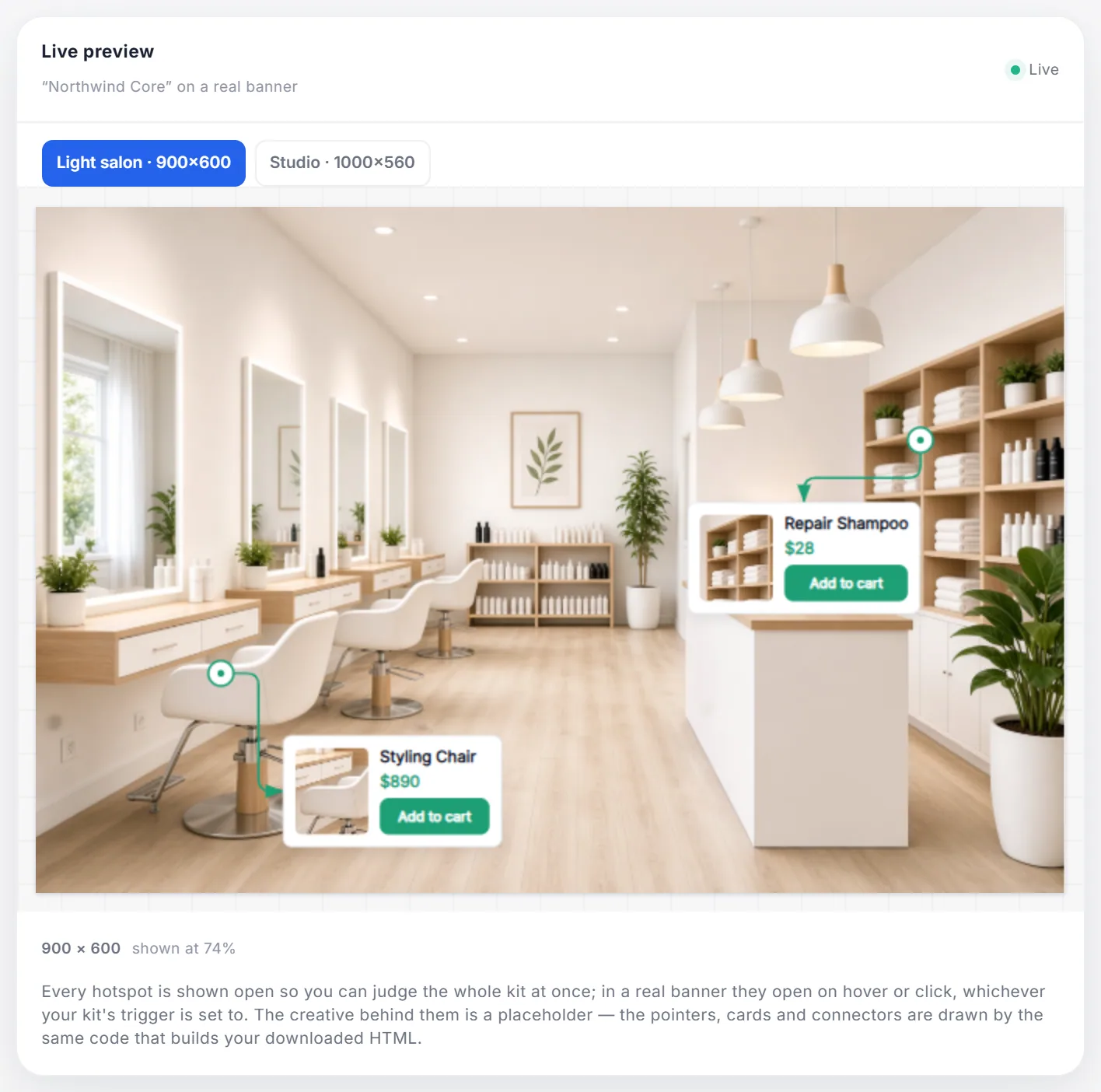
Choose images where the products are clearly visible and have some space around them — that room is where hotspots and tooltips will live.
2. Choose the products with intent
Pick three to five products per banner, and know why each one is there: the hero product, the best-seller, the add-on that completes the look. Fewer, well-chosen products beat a crowded catalogue.
3. Write for the tooltip
A tooltip has room for a name, a price and perhaps one line. Write names the way people search for them, check every price against the shop, and decide what the single action is — usually view the product, sometimes add to cart.
4. Plan the sizes up front
List every format the media plan needs before production starts, and design the master creative so it survives cropping into each one. A product at the very edge of a wide leaderboard won't survive a square crop.
5. Make every click count
Each product link should open the product page, not a category or the home page. Add campaign parameters to each link so you can see afterwards which banner and which product brought each visitor.
6. Keep it on-brand
Agree the hotspot style, the tooltip template and the colours once, and apply them to every size and every banner in the campaign. Consistency makes a campaign look deliberate.
7. Test like a stranger
Before launch, open each banner and use it as someone who has never seen the brief would. Does every hotspot open the right tooltip? Does every link go where it promises? Is anything cut off in the smaller sizes?
8. Measure what matters
Look beyond clicks on the banner as a whole. Which products drew interest? Which sizes and placements performed? Feed what you learn into the next round — the best-performing products and images make the next campaign's master creative.
The short version
An engaging display campaign is a good image, a few well-chosen products, clear tooltips, precise links, consistent style and honest testing. None of it is complicated — it just has to be planned.
New to the format? Start with What are interactive HTML5 banners?