A display banner has traditionally been a picture with a link: one image, one destination, one chance to be clicked. An interactive HTML5 banner is a small web page instead. It is built from HTML, CSS and a little JavaScript, so it can respond to the person looking at it — and that changes what a banner can do.
From picture to page
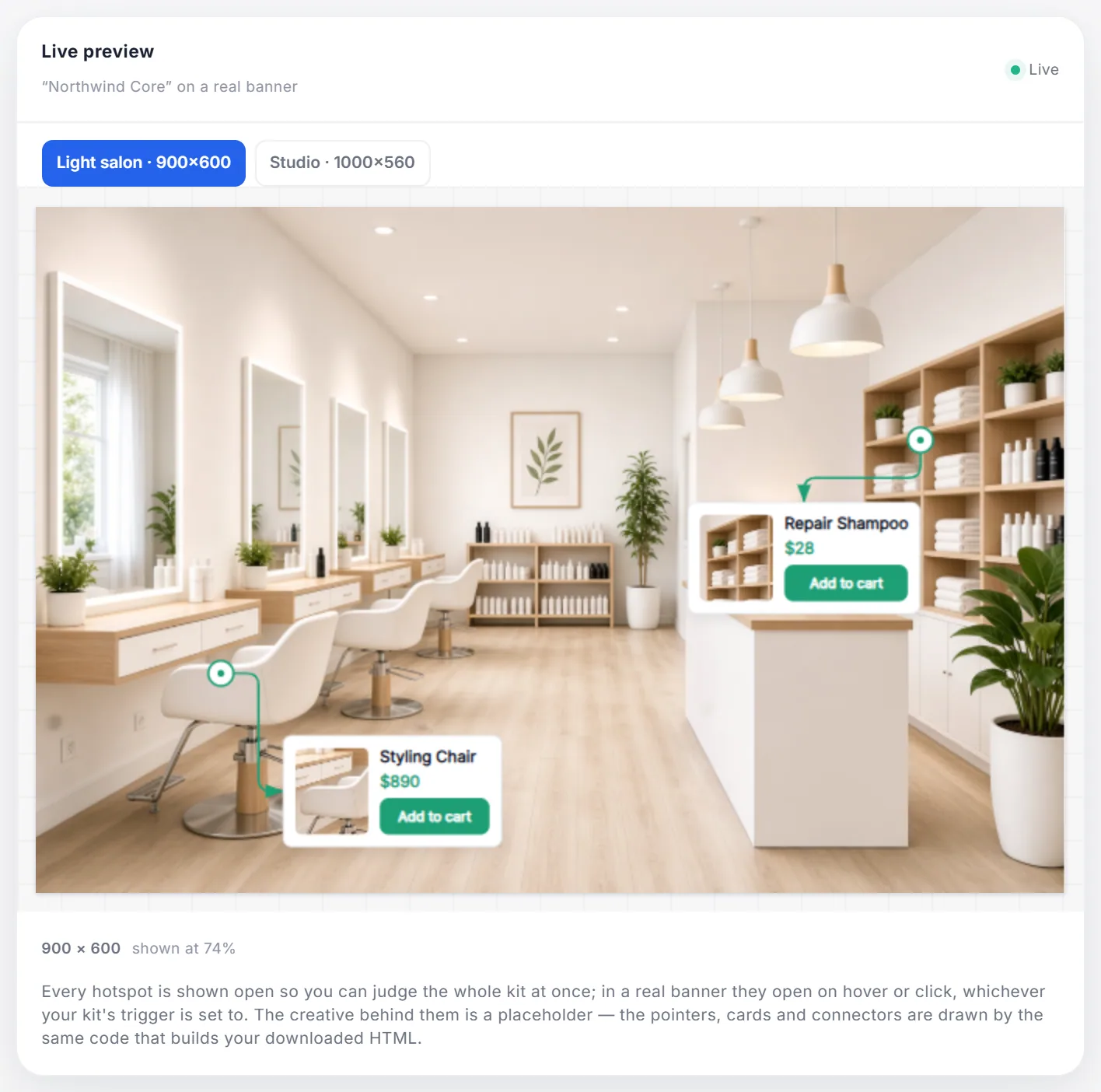
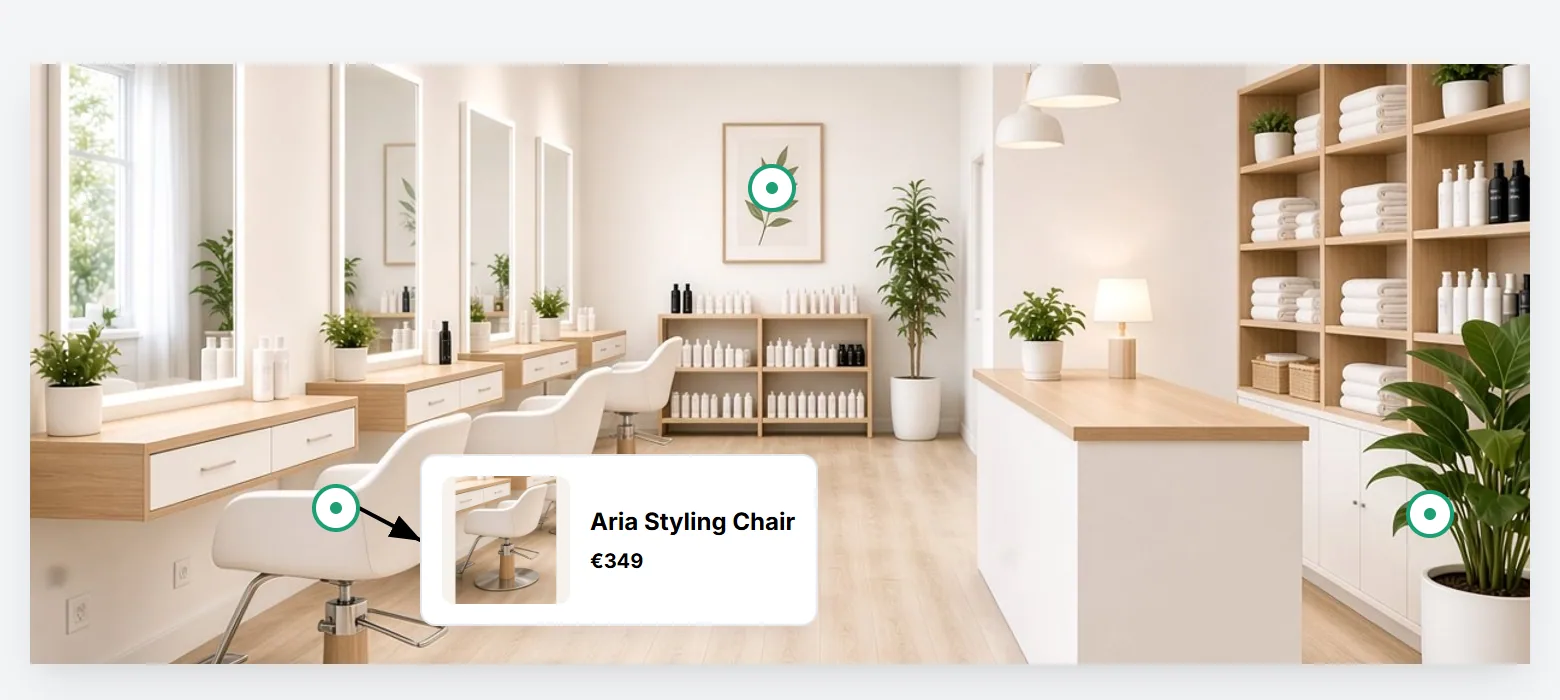
Because an HTML5 banner is a page, it can contain more than one thing to look at and more than one thing to do. In a shoppable banner, for example, a photo of a living room carries small markers — hotspots — on the chair, the lamp and the print on the wall. Moving the mouse over a marker opens a tooltip with that product's name, price and photo, and a click on the tooltip goes straight to that product's page.
The viewer explores the image on their own terms. Nothing autoplays, nothing covers the page, and the banner stays the size it was booked at.
What "HTML5" means here
"HTML5" is the format ad platforms use for anything richer than a static image.
An HTML5 creative is delivered as a small ZIP package — an index.html file with
its styles, script and images — which the ad server loads inside the ad slot. The
major platforms, including Google Ads, Google Ad Manager and Flashtalking, accept
HTML5 creatives, each with its own rules for size, package weight and click
tracking.
The same banner can also run outside ad networks: on your own website, in a shop, or on a landing page, embedded with a short snippet of code.
What an interactive banner can do that a static one can't
- Show several products in one slot. Each hotspot is its own product, price and link, so one creative can carry a whole look or collection.
- Reveal detail on demand. The image stays clean; the information appears only when someone asks for it by hovering or tapping.
- Send each click to the right place. A click on the lamp goes to the lamp, not to a generic category page.
- Keep the brand in charge. Colours, tooltip styles and layouts are designed, not left to a template the publisher controls.
What it doesn't change
An interactive banner is still an ad. It needs a strong image, a clear reason to engage and a destination that delivers on the promise. Interactivity amplifies a good creative; it doesn't rescue a weak one. And it still has to respect each ad platform's specifications — size, weight and click handling.
Where to go from here
If you are deciding whether interactive formats are worth it, read Interactive vs. traditional banner advertising. To see one working, open the live demo and hover over the products.